*掃圖切圖工作完成,一共兩百格。
1.以翻譯官網文字說明為主,圖也是,缺完成圖的會從掃圖中補上。
2.預計一週五篇,但是文字量少就會視情形多翻,忙碌時就停擺,本人是考生,翻這個純粹是當消遣兼練習英文。
3.翻得不好,有錯,請不吝指正。
4.圖的部份原則上以彩色草圖,線稿,最後成品圖為準,至多三張,放太多會佔空間
*掃圖切圖工作完成,一共兩百格。
1.以翻譯官網文字說明為主,圖也是,缺完成圖的會從掃圖中補上。
2.預計一週五篇,但是文字量少就會視情形多翻,忙碌時就停擺,本人是考生,翻這個純粹是當消遣兼練習英文。
3.翻得不好,有錯,請不吝指正。
4.圖的部份原則上以彩色草圖,線稿,最後成品圖為準,至多三張,放太多會佔空間

(本格之彩圖仍為海上民族,與草圖不同) (本格無說明文,底下資料取自網路)
LAPITA CULTURE ~1025
拉匹達文化 ~西元前1千2十5年
太平洋考古學家們公認拉匹達文化(Lapita Culture)最早起源於俾斯麥群島,拉匹達陶器在1909年第一次發現於新不列顛北部的瓦通島(Watom island)。「拉匹達」(Lapita)這一名稱因新卡列多尼亞(New Caledonia)的一個考古遺址而命名。拉匹達陶器群器形有罐、碗及盤,由細砂或是壓碎的貝殼做摻和料,再利用木拍或是墊拍法做造型,並在低溫情況下燒成。最典型的紋飾包括複雜的幾何圖形,也有風格化的人面,並用小的鋸齒形物在陶器腹部壓印出紋飾。這種壓印紋特別流行於早期的拉匹達考古遺址中;而劃紋,特別是素面陶卻出現在晚期。除了陶器之外,拉匹達的物質文化也包括利用大貝殼製成的貝錛、貝珠、貝墜、手鐲、臂環、削皮器、魚餌器等;另有骨器、石錛、石錘、石磨、石銼以及用燧石及黑曜石製成的切割器。
拉匹達遺址大半是位於小島的露天地點或是海岸地區。經過長年的發掘,發現了干欄式房屋的柱洞及茅草屋木構建築,以及煮食地點。另外也出現石灶、陶鍋、由陶器破片或是剩食堆積而成的垃圾堆,偶見儲藏穴。由上述證據可推知當時村落成群,在拉匹達文化分布的西區,房屋蓋得相當大。

(本格之彩圖仍為海上民族,與草圖不同) (本格無說明文,底下資料取自維基)
THE ZHOU DYNASTY ~1050
周朝 ~西元前1千5十年
周朝是中國歷史上繼商朝之後的朝代。周朝分為「西周」(前11世紀中期-前771年)與「東周」(前770年-前256年)兩個時期。西周由周武王姬發創建,定都鎬京(宗周);公元前770年(周平王元年),平王東遷,定都洛邑(成周),此後周朝的這段時期稱為東周。其中東周時期又稱「春秋戰國」,分為「春秋」及「戰國」兩部分。周王朝存在的時間從約前11世紀至前256年,共計存在約為791年,另一說是868年,兩者相差一百多年,問題點在於周朝的建國之年一直無法確認。周朝是中國第三個也是最後一個世襲封建王朝,其後秦漢開始成為具有從中央到地方的統一政府的大一統國家。
史書常將西周和東周合稱為兩周。另外,史學界通常所提到的先秦,主要指周朝,如先秦諸子中之先秦。

一共七張,接起來還算好,這戰爭模組刻意畫成前後可相接的形式,接多一點成一圓也未嘗不可。
仔細看,每張圖有些許差異,像是玩起來很整人的那種找碴遊戲XD
想看大圖請點:http://i.imgur.com/EXzBx.jpg (前端貼齊水平線)
http://i.imgur.com/BVtiV.jpg (如上圖)
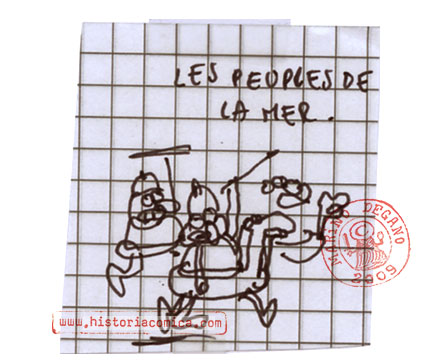
The Sea Peoples is the term used for a confederacy of seafaring raiders of the second millennium BC who sailed into the eastern shores of the Mediterranean, caused political unrest, and attempted to enter or control Egyptian territory during the late 19th dynasty and especially during Year 8 of Ramesses III of the 20th Dynasty. The Egyptian Pharaoh Merneptah explicitly refers to them by the term "the foreign-countries (or 'peoples') of the sea" in his Great Karnak Inscription. Although some scholars believe that they invaded Cyprus, Hatti and the Levant, this hypothesis is disputed. (click to see all the article on Wikipedia)
海上民族 ~西元前1千1百7十5年-- ~西元前1千2十5年
海上民族是一個詞彙,用來表示發生於西元前兩千年航行於地中海東岸的海上掠奪的聯盟,該聯盟從埃及第十九王朝開始,特別是第廿王朝的拉美西斯三世執政第八年,引起了政治動盪,並試圖進入或控制埃及領土。埃及法老麥倫普塔在他的麥倫普塔赫石碑就明確指出,該詞彙表示”海上的外國國家(或人民)”。雖然有些學者認為他們入侵了賽普勒斯,西臺和黎凡特,但這個假設是有爭議的。
(此條目維基無中文版)

In archaeology, the Iron Age is the prehistoric period in any area during which cutting tools and weapons were mainly made of iron or steel. The adoption of this material coincided with other changes in society, including differing agricultural practices, religious beliefs and artistic styles .
The Iron Age is the last principal period in the three-age system for classifying prehistoric societies, preceded by the Bronze Age. Its dates and context vary depending on the geographical region. The Iron Age in each area ends with the beginning of the historical period, i.e. the local production of ample written sources. Thus, for instance, the British Iron Age ends with the Roman Conquest.
The term "Iron Age" was originally derived from the "Ages of Man", i.e. the ages of human existence on the Earth according to Classical mythology. While modern historians assume earlier ages in this scheme to be completely mythical ("The Golden Age" and the "Silver Age"), the later Bronze Age and Iron Age of classical mythology are assumed to have preserved the memory of actual periods when the metals mentioned dominated human life. (click to see all the article on Wikipedia)
鐵器時代 ~西元前1千2百年

The Trojan Horse was a tale from the Trojan War, as told in Virgil's Latin epic poem The Aeneid. The events in this story from the Bronze Age took place after Homer's Iliad, and before Homer's Odyssey . It was the stratagem that allowed the Greeks finally to enter the city of Troy and end the conflict. In the best-known version, after a fruitless 10-year siege of Troy the Greeks built a huge figure of a horse in which a select force of men hid. The Greeks pretended to sail away, and the Trojans pulled the Horse into their city as a victory trophy. That night the Greek force crept out of the Horse and opened the gates for the rest of the Greek army, which had sailed back under cover of night. The Greek army entered and destroyed the city, decisively ending the war. A "Trojan Horse" has come to mean any trick that causes a target to invite a foe into a securely protected bastion or place.
The priest Laocoön guessed the plot and warned the Trojans, in Virgil's famous line "Timeo Danaos et dona ferentes" (Do not trust Greeks bearing gifts), but the god Athena sent two sea serpents to strangle him, and his sons Antiphantes and Thymbraeus, before he could be believed. King Priam's daughter Cassandra, the soothsayer of Troy, insisted that the horse would be the downfall of the city and its royal family but she too was ignored, hence their doom and loss of the war. (click to see all the article on Wikipedia)
特洛伊木馬 ~西元前1千2百4十年
特洛伊木馬源自於特洛伊戰爭,記述於維吉爾的拉丁史詩—埃涅阿斯記當中。這故事發生於青銅時代,介於荷馬史詩的伊里亞德與奧德賽之間。依照希臘人的戰略,最終他們必須進入特洛伊城來結束整場戰爭。在最知名的版本中,十年圍攻特洛伊城依舊未果,希臘人建造了一台巨型木馬,其中可以藏人。希臘人假裝搭船逃離,特洛伊人將木馬拉進城內作為戰利品。當天晚上,希臘士兵躡手躡腳的離開了木馬,並且打開了大門,其他的希臘軍隊趁著夜色又航行了回來。希臘軍隊進入並摧毀了該城,果斷地結束了戰爭。”特洛伊木馬”表示使用某些手段,使目標讓敵人進入防護嚴密的城堡之中。
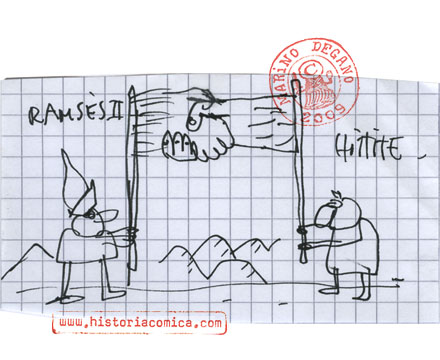
Ramesses II was the third Egyptian pharaoh of the Nineteenth dynasty. He is often regarded as Egypt's greatest, most celebrated, and most powerful pharaoh. His successors and later Egyptians called him the "Great Ancestor" .
He was born around 1303 BC and at age fourteen, Ramesses was appointed Prince Regent by his father Seti I. He is believed to have taken the throne in his early 20s and to have ruled Egypt from 1279 BC to 1213 BC for a total of 66 years and 2 months, according to Manetho. He was once said to have lived to be 99 years old, but it is more likely that he died in his 90th or 91st year. If he became Pharaoh in 1279 BC as most Egyptologists today believe, he would have assumed his throne on May 31, 1279 BC, based on his known accession date of III Shemu day 27. Ramesses II celebrated an unprecedented 14 sed festivals during his reign—more than any other pharaoh. On his death, he was buried in a tomb in the Valley of the Kings; his body was later moved to a royal cache where it was discovered in 1881, and is now on display in the Cairo Museum. (click to see all the article on Wikipedia)
拉美西斯二世 ~西元前1千3百2十年
拉美西斯二世是埃及第十九王朝的第三位法老。他常被認為是埃及最偉大,最有名,也最強大的法老。他的繼任者及後人均稱他為”偉大的先祖”。

Moses was, according to biblical texts, a religious leader, lawgiver, and prophet, to whom the authorship of the Torah is traditionally attributed. Also called Moshe Rabbeinu in Hebrew (Lit. "Moses our Teacher"), he is the most important prophet in Judaism , and also considered an important prophet by Christianity, Islam, the Bahá'í Faith, Rastafari, and many other faiths.
According to the Book of Exodus, Moses was born in a time when war threatened and the large increase in the number of his people concerned the Egyptian Pharaoh who was worried that they might help Egypt's enemies. Moses' Hebrew mother, Jochebed, hid him when the Pharaoh ordered all newborn Hebrew boys to be killed, and he ended up being adopted into the Egyptian royal family. After killing an Egyptian slave-master, Moses fled across the Red Sea to Midian where he tended the flocks of Jethro, a priest of Midian on the slopes of Mt. Horeb. After the Ten Plagues were unleashed on Egypt, Moses led the Hebrew people out of Egypt, across the Red Sea, where they based themselves at Horeb and compassed the borders of Edom. It was at this time, that according to the Bible, Moses received the Ten Commandments. Despite living to 120, according to Exodus, Moses died before reaching the Land of Israel. (click to see all the article on Wikipedia)
摩西 ~西元前1千3百2十年
根據聖經所述,摩西是宗教領袖,立法者及先知,在傳統上認定為托拉(律法書,猶太律法,摩西五書)的作者。在希伯來文中也被稱為Moshe Rabbeinu(摩西拉比)(意即摩西吾師),他是猶太教中最重要的先知,也是基督教,伊斯蘭教,巴哈伊信仰,拉斯特法里教及其他信仰的重要先知。

Akhenaten (often also spelled Echnaton, Akhnaton, or rarely Ikhnaton; meaning Effective spirit of Aten) was known before the fifth year of his reign as Amenhotep IV (sometimes given its Greek form, Amenophis IV, and meaning Amun is Satisfied). A Pharaoh of the Eighteenth dynasty of Egypt, he ruled for 17 years and died in 1336 BC or 1334 BC. He is especially noted for abandoning traditional Egyptian polytheism and introducing worship centered on the Aten which is sometimes described as monotheistic, but henotheism would be a more accurate description, since he ranked the Aten above other gods but did not deny their existence. Indeed, an early inscription likens them to stars as compared with the sun, and later official language avoids calling the Aten a god, as if to create for the solar deity a status above mere gods. Akhenaten tried to bring about a departure from traditional religion that in the end would not be accepted. After his death, traditional religious practice was gradually restored, and when some dozen years later rulers without clear rights of succession from the Eighteenth Dynasty founded a new dynasty, they discredited Akhenaten and his immediate successors, referring to Akhenaten himself as 'the enemy' in archival records. He was all but lost from history until the discovery, in the nineteenth century, of Amarna, the site of Akhetaten, the city he built for the Aten. Early excavations at Amarna by Flinders Petrie sparked interest in the enigmatic pharaoh which increased with the discovery in the Valley of the Kings, at Luxor, of the tomb of King Tutankhamun, who may have been his son. Akhenaten remains an interesting figure, as does his Queen, Nefertiti. Their modern interest comes partly from his connection with Tutankhamun, partly from the unique style and high quality of the pictorial arts he patronized, and partly from ongoing interest in—and, all too often, less than verifiable claims about—the religion he attempted to establish. (click to see all the article on Wikipedia)
阿肯那頓 ~西元前1千3百6十年
阿肯那頓(也拼作Echnaton, Akhnaton,少部分拼成埃赫納頓,意即阿頓(埃及太陽神)光輝的意志)在他的王朝頭五年,被稱為阿蒙霍特普四世(有時是以希臘的形式,稱為阿蒙諾菲斯四世,意即阿蒙表示滿意)。他是埃及第十八王朝的法老,統治了十七年,於西元前1336年或1334年去世。他進行了宗教改革,拋棄了埃及傳統的多神教,改將阿頓設立為崇拜中心的一神論,由於阿頓的地位高於其他神祇,稱之為一神教更為精準,雖然他並沒有否定其他神祇的存在。事實上,在早期的碑文中,曾用了太陽與星星來類比,後期的官方語文中則避免稱阿頓為神,而以太陽神取而代之。阿肯那頓試圖改變傳統宗教,但到了其任期末期,改革仍並不被接受。他去世之後,傳統的宗教習俗又逐漸恢復,當十幾年後,統治者建立了一新王朝,而非從第十八王朝明確的繼承下來,他們敗壞了阿肯那頓及其繼承人的名聲,將阿肯那頓記錄成”敵人”。他在歷史上的所有記錄幾乎全部消失,直到十九世紀時,在阿瑪納,阿肯那頓為了阿頓而建築的城市,相關紀錄又再被發掘出來。由弗林德斯.皮特里於阿瑪納的早期發掘,引發了人們對於這位神祕法老的興趣,墓地位於盧克索的國王谷的圖坦卡門國王,可能是他的兒子。阿肯那頓依然是個有趣的話題,如同他的皇后娜芙蒂蒂一樣。他們新潮的興趣一部份如同圖坦卡門一樣,一部分則具獨特風格及高品質的圖案藝術,一部分則是有關於他試圖建立的宗教制度。
(維基連結:阿肯那頓)

Scribes in Ugarit appear to have originated the Ugaritic alphabet around 1400 BC; 30 letters, corresponding to sounds, were adapted from cuneiform characters and inscribed on clay tablets (but cf. Byblos). A debate exists as to whether the Phoenician or Ugaritic alphabet was first . While many of the letters show little or no formal similarity, the standard letter order (preserved in the latin alphabet as A, B, C, D, etc.) shows strong similarities between the two, suggesting that the Phoenician and Ugaritic systems were not wholly independent inventions. It was later the Phoenician alphabet that spread through the Aegean and on Phoenician trade routes throughout the Mediterranean. The Phoenician system became the basis for the first true alphabet, when it was adopted by Greek speakers who modified some of its signs to represent vowel sounds as well, and as such was in turn adopted and modified by populations in Italy (including ancestors of the Romans). Compared with the difficulty of writing Akkadian in cuneiform—such as the Amarna Letters from ca. 1350 BC— the flexibility of an alphabet opened a horizon of literacy to many more kinds of people. In contrast, the syllabary (called Linear B) used in Mycenaean Greek palace sites at about the same time was so cumbersome that literacy was limited largely to administrative specialists. (click to see all the article on Wikipedia)
字母系統 ~西元前1千4百年
烏加里特的書記官似乎在西元前1400年發明了烏加里特字母,該字母系統從楔形文字發展出30個字母,與聲音相對應,並刻在泥板之上。腓尼基字母與烏加里特字母何者為先,至今仍有爭論。雖然兩者的字母之間只有少量或非直觀的相似性,但由於兩者的字母標準順序(拉丁字母中的A,B,C,D等)出現了強烈的相似度,使得腓尼基系統與烏加里特系統被認為是有所關聯的。不過,腓尼基字母傳遍了愛琴海以及地中海中的腓尼基人貿易路線。腓尼基系統成為其他字母系統的基礎,希臘人修改該字母來表示母音,接著是義大利人跟著修改使用(包含了古代羅馬人)。與困難的阿卡德楔形文字相比--像是公元前1350年的阿馬納字母—具有彈性的表音字母更能普及識字率。相較之下,同時使用於邁錫尼希臘宮殿的音節字母(稱為線性文字B),只侷限於行政專員,無法擴展到各階層。
(維基連結:烏加里特)