- 11月 02 週五 201220:52
149 LAPITA CULTURE 拉匹達文化

- 11月 02 週五 201220:11
148 THE ZHOU DYNASTY 周朝

- 11月 01 週四 201221:42
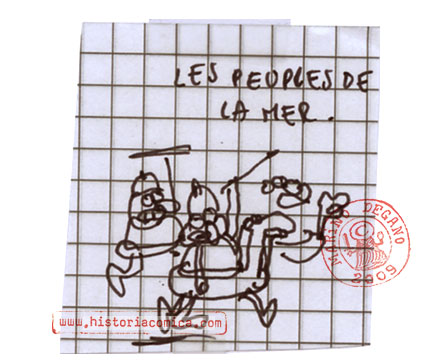
143~147 THE SEA PEOPLES 海上民族
- 10月 31 週三 201223:08
142 THE IRON AGE 鐵器時代

THE IRON AGE ~1200
In archaeology, the Iron Age is the prehistoric period in any area during which cutting tools and weapons were mainly made of iron or steel. The adoption of this material coincided with other changes in society, including differing agricultural practices, religious beliefs and artistic styles .
- 10月 28 週日 201221:10
141 THE TROJAN HORSE 特洛伊木馬

THE TROJAN HORSE ~1240
The Trojan Horse was a tale from the Trojan War, as told in Virgil's Latin epic poem The Aeneid. The events in this story from the Bronze Age took place after Homer's Iliad, and before Homer's Odyssey . It was the stratagem that allowed the Greeks finally to enter the city of Troy and end the conflict. In the best-known version, after a fruitless 10-year siege of Troy the Greeks built a huge figure of a horse in which a select force of men hid. The Greeks pretended to sail away, and the Trojans pulled the Horse into their city as a victory trophy. That night the Greek force crept out of the Horse and opened the gates for the rest of the Greek army, which had sailed back under cover of night. The Greek army entered and destroyed the city, decisively ending the war. A "Trojan Horse" has come to mean any trick that causes a target to invite a foe into a securely protected bastion or place.
- 10月 27 週六 201221:29
140 RAMESSES II 拉美西斯二世
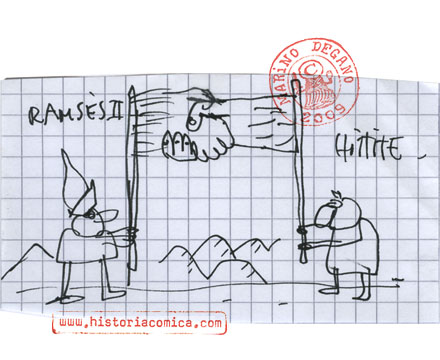
RAMESSES II ~1280
Ramesses II was the third Egyptian pharaoh of the Nineteenth dynasty. He is often regarded as Egypt's greatest, most celebrated, and most powerful pharaoh. His successors and later Egyptians called him the "Great Ancestor" .
- 10月 26 週五 201221:52
139 MOSES 摩西

MOSES ~1320
Moses was, according to biblical texts, a religious leader, lawgiver, and prophet, to whom the authorship of the Torah is traditionally attributed. Also called Moshe Rabbeinu in Hebrew (Lit. "Moses our Teacher"), he is the most important prophet in Judaism , and also considered an important prophet by Christianity, Islam, the Bahá'í Faith, Rastafari, and many other faiths.
- 10月 26 週五 201201:40
138 ECHNATON 阿肯那頓

ECHNATON ~1360
Akhenaten (often also spelled Echnaton, Akhnaton, or rarely Ikhnaton; meaning Effective spirit of Aten) was known before the fifth year of his reign as Amenhotep IV (sometimes given its Greek form, Amenophis IV, and meaning Amun is Satisfied). A Pharaoh of the Eighteenth dynasty of Egypt, he ruled for 17 years and died in 1336 BC or 1334 BC. He is especially noted for abandoning traditional Egyptian polytheism and introducing worship centered on the Aten which is sometimes described as monotheistic, but henotheism would be a more accurate description, since he ranked the Aten above other gods but did not deny their existence. Indeed, an early inscription likens them to stars as compared with the sun, and later official language avoids calling the Aten a god, as if to create for the solar deity a status above mere gods. Akhenaten tried to bring about a departure from traditional religion that in the end would not be accepted. After his death, traditional religious practice was gradually restored, and when some dozen years later rulers without clear rights of succession from the Eighteenth Dynasty founded a new dynasty, they discredited Akhenaten and his immediate successors, referring to Akhenaten himself as 'the enemy' in archival records. He was all but lost from history until the discovery, in the nineteenth century, of Amarna, the site of Akhetaten, the city he built for the Aten. Early excavations at Amarna by Flinders Petrie sparked interest in the enigmatic pharaoh which increased with the discovery in the Valley of the Kings, at Luxor, of the tomb of King Tutankhamun, who may have been his son. Akhenaten remains an interesting figure, as does his Queen, Nefertiti. Their modern interest comes partly from his connection with Tutankhamun, partly from the unique style and high quality of the pictorial arts he patronized, and partly from ongoing interest in—and, all too often, less than verifiable claims about—the religion he attempted to establish. (click to see all the article on Wikipedia)
- 10月 21 週日 201221:47
137 THE ALPHABET 字母系統

THE ALPHABET ~1400
Scribes in Ugarit appear to have originated the Ugaritic alphabet around 1400 BC; 30 letters, corresponding to sounds, were adapted from cuneiform characters and inscribed on clay tablets (but cf. Byblos). A debate exists as to whether the Phoenician or Ugaritic alphabet was first . While many of the letters show little or no formal similarity, the standard letter order (preserved in the latin alphabet as A, B, C, D, etc.) shows strong similarities between the two, suggesting that the Phoenician and Ugaritic systems were not wholly independent inventions. It was later the Phoenician alphabet that spread through the Aegean and on Phoenician trade routes throughout the Mediterranean. The Phoenician system became the basis for the first true alphabet, when it was adopted by Greek speakers who modified some of its signs to represent vowel sounds as well, and as such was in turn adopted and modified by populations in Italy (including ancestors of the Romans). Compared with the difficulty of writing Akkadian in cuneiform—such as the Amarna Letters from ca. 1350 BC— the flexibility of an alphabet opened a horizon of literacy to many more kinds of people. In contrast, the syllabary (called Linear B) used in Mycenaean Greek palace sites at about the same time was so cumbersome that literacy was limited largely to administrative specialists. (click to see all the article on Wikipedia)
- 10月 04 週四 201223:13
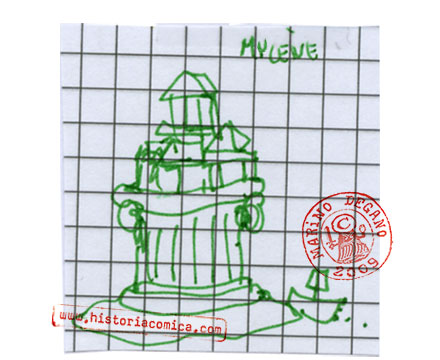
136 MYCENAE 邁錫尼
 相關介紹 (1)